
Introduction
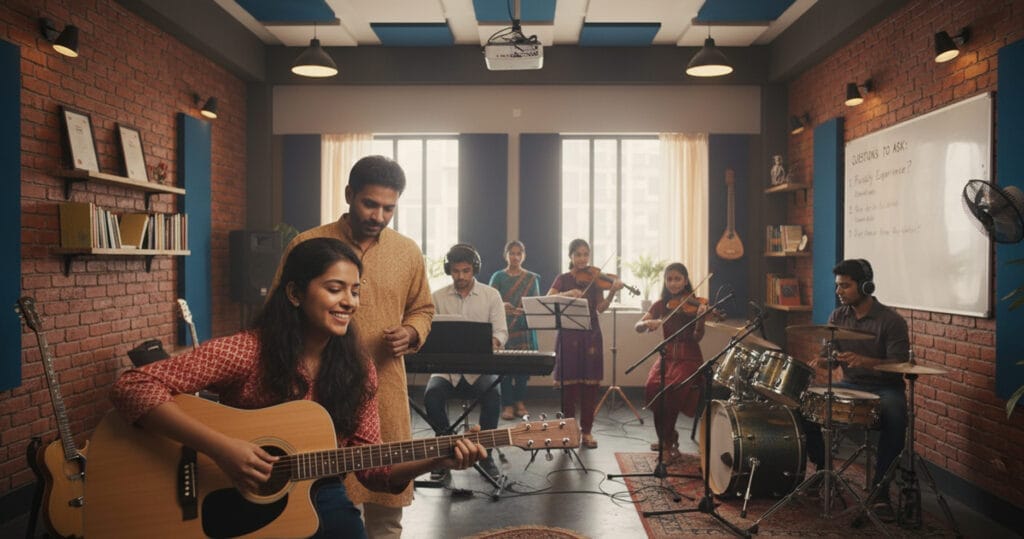
Music has the power to bring everyone together, across nations, age groups, and even personal connections. Learning a musical instrument is a very impactful and life-changing decision to make. It doesn’t matter if you are 5 or 50. Every age is a good age to start playing a musical instrument, whether it is a piano or a guitar.
Research studies published by the National Institutes of Health indicate lasting positive changes to the brain from learning music. Training in music is not aimed at learning to be a professional or expert at it, but rather, at learning to live an enriched life filled with music and sounds.
What are Musical Instruments?
Musical instruments are used to make sounds in an organised and systematic way and are of different categories. They include:
- stringed instruments such as guitars,
- wind instruments, like flutes,
- percussion instruments, such as drums, and
- keyboard instruments like the piano.
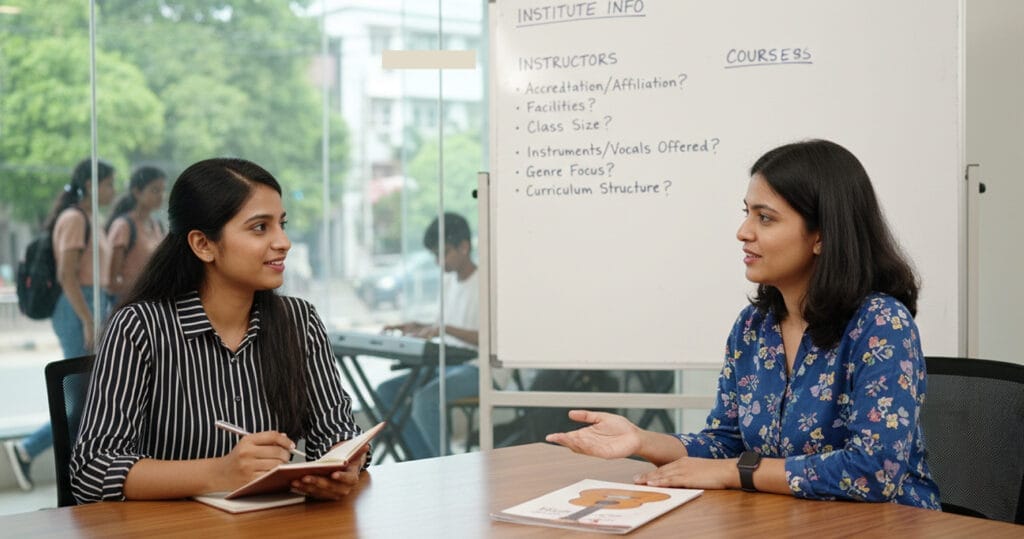
All instruments are different in what they offer. The choice of what instrument to play is dependent on each person’s goal. The Best Music School in Bangalore helps and supports absolute beginners in choosing an instrument that fits their goals and dreams.
The 10 Benefits of Playing a Musical Instrument
1. Enhances Cognitive Function
The brain in a person is wired to change and adapt with practice and learning. Learning how to play an instrument is an example and practice of this. A person’s brain is made to change in this way. Research that has been conducted at Harvard University shows an increase in the size of the sagittal brain in one’s corpus callosum in functioning musicians. The parts of the brain that are used in memory and problem-solving are improved and enhanced to a higher degree than in non-practising musicians.
2. Develops Discipline and Patience
Learning students to play and practice music helps in the improvement of consistency. Learning new needed skills, such as self-control and discipline, is a significant advantage that translates directly into further and significant future accomplishments in school and work.
3. Boosts Emotional Intelligence
Through music, every person has the power to express their emotions, even if they are unable to understand and even if they have no words to explain how they feel. Emotional regulation and empathy are directly improved and enhanced through learning how to play a musical instrument.
4. Expands One’s Circle of Friends
The social aspect of joining bands is substantial. Studies of groupings have shown that the collaboration needed to create new music fosters new friendships that are established through working with and listening to new people.
5. Eases Anxiety
Research shows that playing and listening to music is a very efficacious way to relieve anxiety, as it helps lower serum levels of the stress hormone cortisol. Engaging in focused concentration, that is, a way of creating musical meditational states, helps relieve stress in a much healthier way.
6. Enhances Self-Esteem
Performing provides people with a great deal of positive feedback. Each performance adds to the positive feedback, and this is the reinforcement of self-belief that the person was looking for. Constructive criticism of mistakes helps to take that self-belief to the next level by spreading into other aspects of the person’s life.
7. Improves Time Management
The more a person practices a particular task, the more someone learns to manage their practical responsibilities. This is a lesson in prioritization that is invaluable in the workplace.
8. Improves Focus
Concentration is required to read and understand music while coordinating a variety of different movements. This training to improve concentration and focus is very beneficial for studying and working.
9. Is a Means of Self-Expression
Creativity is something that everyone has. Expression of that creatively and freely is something that is often lost with improvisation in music.
10. Encourages the Value of Wisdom
New challenges in the form of music keep the mind sharp for creativity, as it has to adapt to new techniques and styles.
The benefits of playing an instrument of one’s own choosing are substantial and compounding over time. Better physical coordination is an amalgamation of improved respiratory control and an increased awareness of correct posture.
Why Learning an Instrument is Important
Learning an instrument helps prevent the loss of unique aspects of culture. Traditional and folk instruments are an important part of musical heritage. Local community bands foster social integration and musical participation.
The Best Music Institute prepares students for proper and positive learning outcomes. Music students tend to outperform other students according to The American Psychologist.
Summary
Learning a musical instrument provides learning opportunities that are constructive and beneficial on various levels for the individual. It also aids a person at an existential level. The positive results are numerous and span improved social integration and many other areas. Understanding the benefits of learning music can motivate anyone to begin their musical journey.
The positive effects of learning an instrument are numerous for a person of any age. For younger beginners, learning the piano, guitar, or ukulele is recommended. These are considered the best instruments for beginners. Select the instrument that speaks to you.
Learning a musical instrument promises benefits and is rewarding, whether you are learning on your own or at the Best Music School in Bangalore. Start your musical trip to enrich your life and learning to a new level. Get that instrument and start playing.g
Frequently asked questions
Which instrument is the easiest to start with?
Ukulele is the most recommended. It has four strings and a few simple chords. The piano is also a good option.
Do you need to be able to read music?
It is not necessary at the start. Most players start learning music by ear. Learning to read music becomes necessary as the skill level goes up. The most common approach to teaching learning an instrument is to start with ear learning, and music reading is gradually introduced.
How does learning an instrument help my brain?
Improvisation, composition, and playing by ear of an instrument enhances creativity, which helps strengthen memory, spatial-temporal skills and other executive functioning as well.
Do I need to have musical talent to start?
No, initiative and effort is more important rather than innate talent. Musical skills can be developed and enhanced, over time we all improve. The Best Music Institute helps people reach musical proficiency regardless of starting skill level.
How does learning an instrument improve social skills?
As musical activities require listening and cooperation. Ensemble activities help team collaboration and social activities. Performing activities builds interpersonal skills by providing confidence.
Is it better to focus on one instrument or try multiple?
While starting, it is highly advisable to focus on one instrument to achieve proficiency. Afterwards, there are other instruments to be considered and learning other instruments is beneficial and enriches the understanding of music as a whole. Mastery of a singular instrument requires dedication and commitment.